

Dongguan, Guangdong Mar 3, 2026 (Issuewire.com) - The landscape of global manufacturing is undergoing a profound transformation, driven by the demand for greater flexibility, rapid prototyping, and sustainable production practices. As factories transition toward Industry 4.0, the infrastructure supporting these environments must also evolve. For years, permanent welding was the industry standard; however, the emergence of the Advanced Heavy-Duty Square Tube System Provider, WJ-LEAN Technology, has shifted the paradigm. By offering a sophisticated Heavy Square Tube System, WJ-LEAN provides an adaptable alternative that addresses the inherent limitations of traditional welding. Unlike welding, which is permanent, labor-intensive, and difficult to modify, these modular systems rely on high-precision connectors and standardized profiles to offer superior strength, rapid deployment, and unmatched reconfigurability across diverse industrial sectors.
The Evolution of Industrial Frameworks: From Permanent Structures to Adaptive Systems
In the traditional factory model, heavy-duty structuressuch as machine frames, conveyor supports, and safety partitionswere almost exclusively constructed through manual welding. This process involves cutting raw steel, aligning components, and using high-heat fusion to create a permanent bond. While effective for creating rigid structures, welding introduces significant "friction" into modern manufacturing operations. It requires specialized labor, fire-safety permits, and significant downtime for any onsite modifications.
Conversely, the modular heavy-duty square tube system represents a "lean" approach to industrial construction. These systems utilize square-profile tubes (often 45mm x 45mm or larger) designed to withstand high-load capacities previously reserved for welded steel. The primary differentiator lies in the assembly method: rather than heat-based fusion, these systems utilize mechanical fastening. This shift from a "permanent" mindset to an "adaptive" one allows manufacturers to respond to market changes in real-time. Whether a production line needs to be extended, shortened, or completely redesigned, a modular system can be disassembled and reconfigured without the need for scrap or new raw materials.
Operational Efficiency: Why Modular Square Tube Systems Outpace Welding
The superiority of WJ-LEANs heavy-duty systems over welding can be analyzed through four critical dimensions: installation speed, cost of ownership, workplace safety, and structural flexibility.
Structural Integrity Without the Torch
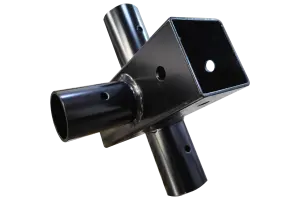
One of the most common misconceptions is that modular systems lack the load-bearing capacity of welded steel. However, modern engineering has closed this gap. WJ-LEANs heavy-duty square tubes are designed with internal reinforcements and high-grade materials that ensure stability under significant stress. By using specialized connectors, such as the three-way flush cross connector, the system distributes weight evenly across the framework. Because there is no heat-affected zone (a common weakness in welds where the metal can become brittle), the structural integrity of the tube remains consistent throughout its entire length.
More On Newsinterestcorp ::
- Distinctive Living Boosts Financial Performance with Strategic Business Intelligence Team
- E-Lins – Reliable OEM 4G/5G Router Supplier with RED, EMC, and LVD Certification for Global IoT Markets
- Fire Protection Markets Worldwide: 2025 to 2035 Development.
- Avery Renner, Recognized by BestAgents.us as a 2025 Top Agent
- FurGPT Launches Emotional Calibration Tools to Deepen Personalized AI Engagement
Rapid Implementation and Minimal Downtime
In a competitive manufacturing environment, time is a critical asset. Welding is a time-consuming process that often requires a "hot work" permit, specialized ventilation, and the cordoning off of large areas to protect other workers from sparks and UV light. A modular square tube system requires only basic hand tools for assembly. This allows for "live" installation where production can continue in one part of the factory while new structures are erected nearby. The absence of fumes and fire hazards means that assembly can occur in cleanroom environments, such as those found in the electronics and medical device industries, where welding would be strictly prohibited.
Technical Precision: The Engineering Behind the 45mm Square Tube System
At the heart of WJ-LEANs technical advantage is the precision engineering of their component library. A flagship example is the three-way flush cross connector designed for 45mm x 45mm square tubes. This component highlights the sophistication of modern modular design. In a traditional welded joint, achieving a perfectly flush, 90-degree intersection on three axes is technically demanding and prone to human error.
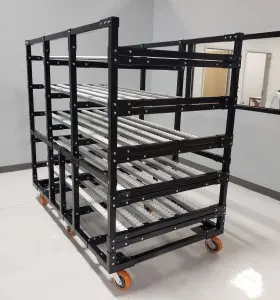
WJ-LEANs connector system ensures a "float-free" fit, meaning the tubes are locked into place with a mechanical tension that mimics the rigidity of a weld but allows for micro-adjustments during the build process. This level of precision is vital for applications such as industrial inspection and testing equipment, where even a millimeter of misalignment can lead to faulty data. The systems design also facilitates the integration of accessoriessuch as leveling feet, casters, and panel mountsdirectly into the tube profile, a feat that would require extensive additional fabrication in a welded setup.
Versatility Across Diverse Industrial Ecosystems
The application of heavy-duty square tube systems extends far beyond simple shelving. WJ-LEAN Technology has successfully deployed these solutions across a vast spectrum of industries, demonstrating the system's inherent versatility.
In the automotive assembly sector, where production lines must be retooled for new vehicle models every few years, the modular system allows for the rapid relocation of conveyor supports and tool jigs. In the electronics and home appliance sectors, the system is used to create ergonomic workstations that can be adjusted to the height and reach of different operators, enhancing both productivity and employee well-being. Furthermore, the medical and food processing industries benefit from the clean, anodized finishes of the square tubes, which do not require painting or anti-rust coatings that could potentially flake off and contaminate the production environment.
Beyond the assembly line, these systems are integral to safety protection. Modular safety fencing and machine guards can be erected quickly to comply with evolving safety regulations, providing a robust barrier that can be easily moved if the machines footprint changes.
Sustainability and Long-Term Value in Industrial Construction
As global regulations regarding carbon footprints and industrial waste tighten, the "use and discard" nature of welded structures becomes a financial and environmental liability. When a welded structure is no longer needed, it is typically cut into pieces and sold as scrap metal, a process that recovers only a fraction of the original investment and consumes significant energy in recycling.
WJ-LEANs modular approach promotes a circular economy within the factory. Because the components are not permanently altered during assembly, they can be reused indefinitely. A frame that served as a testing rig this year can be disassembled and rebuilt as a mobile material cart next year. This reusability dramatically lowers the Total Cost of Ownership (TCO). While the initial material cost of a high-quality modular system may be comparable to or slightly higher than raw steel, the savings in labor, lack of specialized equipment, and long-term reusability make it the more economical choice for forward-thinking enterprises.
WJ-LEAN Technology: Bridging Innovation and Global Industrial Standards
Based in the global manufacturing hub of Dongguan, Guangdong, WJ-LEAN Technology Company Limited has established itself as a leader in industrial construction technical solutions. The companys philosophy is rooted in the "Len" methodologyeliminating waste and maximizing value. With a global market layout and comprehensive service agencies in multiple countries, WJ-LEAN does not merely sell components; they provide integrated technical solutions.
The companys expertise covers mechanical frame structures, parts connection, industrial assembly lines, and non-standard mechanical and electrical equipment. Their reach into fields as diverse as chemical processing, furniture advertising, and cleaning equipment speaks to the universal need for better structural solutions. By maintaining a focus on rigorous quality control and technical innovation, WJ-LEAN ensures that their products meet the demanding safety and performance standards of international markets.
Conclusion
The transition from welding to modular heavy-duty square tube systems is more than a change in hardware; it is a strategic shift toward operational agility. WJ-LEANs systems offer the modern factory a way to build robust, high-performance infrastructure that can grow and change alongside the business. By prioritizing ease of assembly, structural precision, and environmental sustainability, WJ-LEAN is helping manufacturers around the world move faster, work safer, and reduce costs. In the era of rapid industrial change, the ability to adapt is the ultimate competitive advantage, and the modular square tube system is the foundation upon which that adaptability is built.
For more information on heavy-duty modular solutions and technical specifications, please visit: https://www.wj-lean.com/
Source :WJ-LEAN TECHNOLOGY (DONGGUAN) COMPANY LIMITED
This article was originally published by IssueWire. Read the original article here.